Let me give you a complete overview, including what it is, how it works, and how it’s applied — with a gentle focus on practical use.
EFT Tapping: Emotional Freedom Technique
 **What EFT Tapping Is
EFT (Emotional Freedom Technique), commonly called Tapping, is a mind-body therapy that combines:
-
Psychological focus — acknowledging an emotion, thought, or memory that causes distress.
-
Physical stimulation — tapping specific acupressure points on the body, usually the face, chest, and hands.
It’s often described as a way to “release stuck emotions” or reduce stress, anxiety, trauma, and negative patterns.
How EFT Tapping Works
-
You identify the issue: a fear, craving, trauma, pain, or limiting belief.
-
You tap on specific meridian points while voicing a statement about the issue.
-
Tapping is believed to send calming signals to the brain, especially the amygdala, reducing stress response and reprogramming emotional reactions.
-
Over time, it can help you feel calmer, more in control, and emotionally balanced.
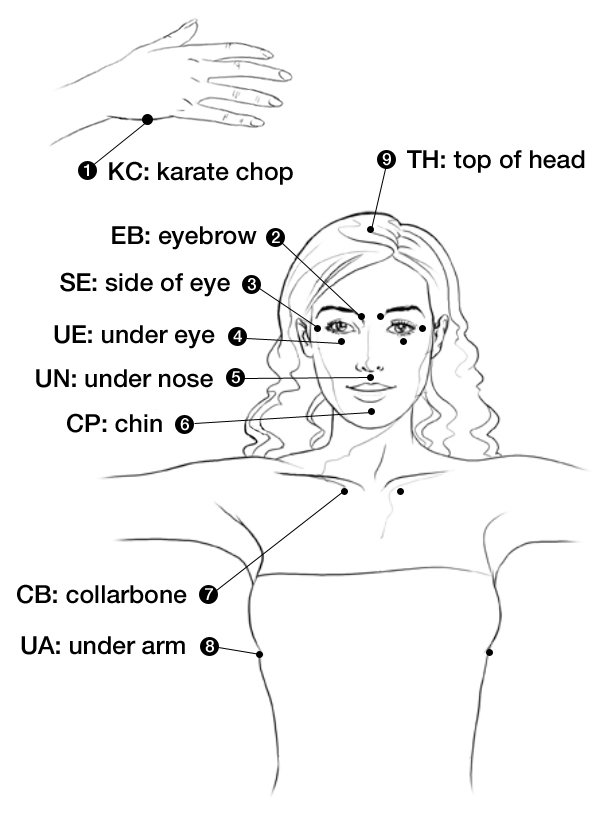
Common EFT Tapping Points
-
Karate Chop (Side of Hand) – used for setup statements
-
Eyebrow (EB) – inner edge of eyebrow
-
Side of Eye (SE) – outer corner of eye
-
Under Eye (UE) – under the eye on the cheekbone
-
Under Nose (UN) – between nose and upper lip
-
Chin (CH) – below lower lip
-
Collarbone (CB) – just below the collarbone
-
Under Arm (UA) – side of body, about 4 inches below armpit
-
Top of Head (TH) – crown of the head
These are sometimes called meridian points, borrowed from traditional Chinese medicine.
Basic EFT Tapping Sequence
-
Identify the Issue:
Focus on a specific problem or emotion. Rate its intensity from 0 to 10. -
Setup Statement (Karate Chop):
“Even though I feel [problem/emotion], I deeply and completely accept myself.” -
Tapping Sequence (EB → SE → UE → UN → CH → CB → UA → TH):
-
Tap 5–7 times on each point while repeating a reminder phrase (short, focused statement about the problem, e.g., “this anxiety” or “my craving”).
-
-
Check Intensity:
Re-rate the intensity from 0–10. Repeat until intensity decreases significantly. -
Closing Affirmation:
Finish with a positive, empowering statement about healing, calm, or success.
Common Uses of EFT Tapping
-
Anxiety and stress relief
-
Emotional trauma and PTSD
-
Depression or low mood
-
Phobias or fears
-
Cravings and addictions
-
Pain management
-
Sleep issues
-
Self-confidence, self-esteem, and personal growth
Tips for Effective EFT Tapping
-
Tap gently but firmly; it should feel comfortable.
-
Stay focused on the emotion or memory. Don’t rush.
-
Repeat statements aloud for clarity.
-
Combine with deep breathing for greater calming effect.
-
Consistency is key — repeated practice reinforces emotional reprogramming.